Business Name: Superior Surface Prep and Repair
Address: 12709 Co Rd 87, Lakeview, OH 43331
Phone: (567) 825-3443
Superior Surface Prep and Repair
Professional, fully insured mobile sandblasting company that handles projects from start to finish. Servicing Lima, OH, Columbus, OH, Lakeview, OH, Wapakoneta, OH, Bellefontaine, OH, Marysville, OH, Dublin, Oh, Westerville, Oh, Fort Wayne, IN, West Liberty, OH, Dayton, OH, Huber Heights, OH, Ada, OH, Toledo, OH, Findlay, OH
12709 Co Rd 87, Lakeview, OH 43331
Business Hours
Monday thru Friday: 7:00am to 5:00pm Saturday: Closed Sunday: Closed
Facebook:
If you have ever watched a dry blaster erase rust or old paint in a fog of white dust, you understand the 2 sides of traditional sandblasting. It is fast and efficient, yet untidy and disruptive. Dustless blasting keeps the productive side of blasting and significantly minimizes the cloud. By injecting water into the blast stream and matching it with a measured abrasive, you gain control. Surface areas tidy much faster, ambient dust drops sharply, and neighbors do not come outside wondering what storm rolled in.
I have run mobile blasting rigs through tight residential streets and down long refinery passages. The exact same core idea operates in both settings, but the method you established, contain, and surface makes the difference between a neat, foreseeable day and a pricey cleanup. Listed below you will discover useful approaches that equate from garage doors and pool decks to bridge beams and procedure tanks, in addition to numbers you can rely on, media options that matter, and the small decisions that keep jobs on time.
What dustless blasting truly does
At the nozzle, compressed air carries a mix of water and abrasive. The water does 2 tasks. It knocks air-borne dust out of the airstream and it cushions particle impact, which safeguards fragile substrates. The abrasive does the cutting. The best blend lets you tune aggression. With crushed glass at 60 to 90 psi and about a 10 to 20 percent water flow, you can get rid of stopping working paint from brick without chewing mortar. Bump pressure to 100 to 120 psi and change to a tighter mesh garnet, and mill scale on structural steel vanishes while you develop a consistent anchor profile for coatings.
Performance differs by substrate and finishing, however field averages hold up. Residential paint removal on wood siding typically cleans at 80 to 150 square feet per hour with a light profile. Heavy industrial coatings, two to three layers thick on steel, tend to run at 40 to 80 square feet per hour depending on finishing tenacity and nozzle size. Dust reduction is noticeable to the eye. Correctly tuned rigs typically cut noticeable airborne dust by 80 to 90 percent compared to dry blasting.
The technique is still blasting. It is not push washing, and it is not chemical removing. You still require capable compressors, hardened pipes, metering valves, and an experienced operator. Treated as a professional tool, dustless blasting belongs in the same household as sandblasting, soda blasting, and glass blasting services. The distinction is control.
Where it shines in the field
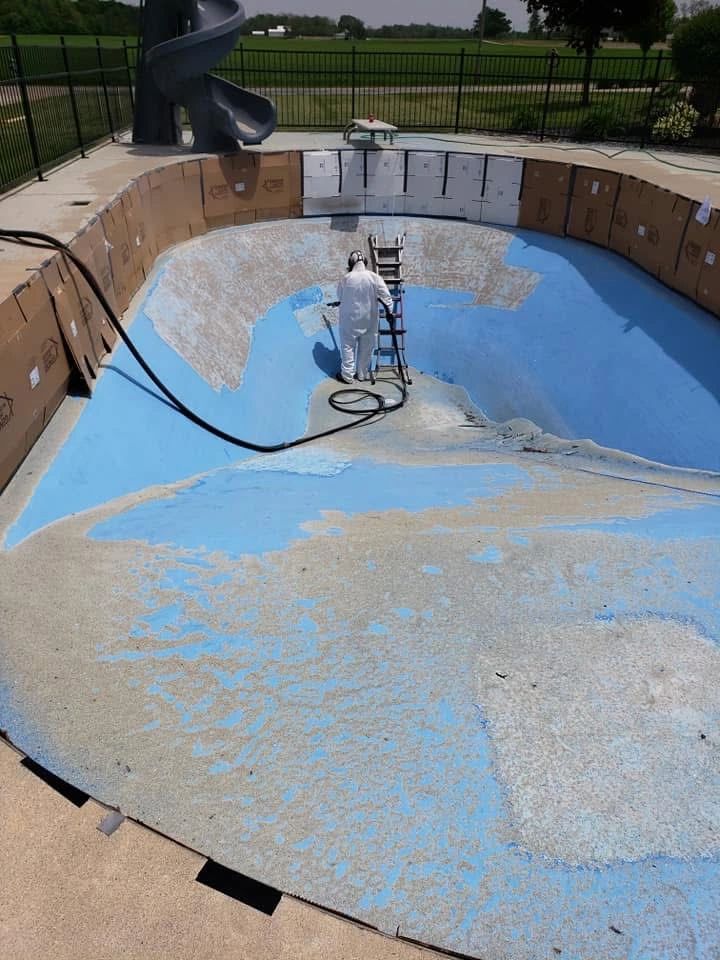
On the residential side, dustless blasting settles in tight areas and for surfaces that do not like heat. Painted brick, cedar siding, metal fences, ornamental iron, garage doors, aluminum boat hulls, and pool coping react well. The water cools the work and keeps paint from melting or smearing. In the retail setting, fast turnarounds matter. You can remove latex from a concrete storefront piece at dusk and have foot traffic on a freshly profiled, non slip surface the next early morning with minimal sweep up. For industrial surface preparation, the value rises with the risk. Tanks with live procedure lines close by, catwalks above operating units, or beam cleaning in a partially enclosed area benefit from lower dust and less ignition risk compared to dry blasting.
When you do need a dry, high profile finish for particular coatings, a hybrid method works. Blast dustless for bulk elimination, then change to dry for a last pass to tweak the anchor pattern and speed drying. We do this on steel stair towers when the specification requires a near white metal surface and a 2.5 to 3.5 mil profile, confirmed with replica tape and a spring mic.
Media options that really matter
Abrasive choice changes your day. I keep three staples on the truck for mobile blasting solutions: recycled crushed glass, garnet, and salt bicarbonate.
Crushed glass is your house mix for basic rust removal blasting and paint removal blasting. It is angular, cuts well, and is inert. It leaves a tidy, lightly engraved surface on metals and a manageable bite on masonry. It likewise sets well with water at moderate pressures, which suits on site sandblasting where splash and overspray are concerns.
Garnet steps in when you require more bite on steel or a tighter profile. It costs more per bag, but you utilize it efficiently. For pitted structural steel, a mid mesh garnet lets you clear rust at the root of the pit and establish an even surface for epoxy primers.
Soda is gentle. It stands out on softer substrates, thin sheet metal, or where you desire very little profile, such as vintage automobile panels or soft wood trim. In dustless mode it still travels with water, but remember that soda residues are alkaline and should be rinsed thoroughly before painting. A pH test on the rinse water, aiming near neutral, prevents covering failure.
For glass blasting services on fragile items like etched signs or ornamental panels, ultra fine glass media and low pressure settings, sometimes below 50 psi, paired with a tighter water stream, can eliminate pollutants without frosting the surface.
The anchor profile and why your coating cares
Removing rust and paint is only half the job. Surface preparation services exist to deliver a substrate all set to bond. Coatings require a mechanical key. Blast too lightly and a two part epoxy will delaminate under traffic or UV. Blast too strongly and you can expose pores or underfilm that traps moisture.
On steel, a 1.5 to 3.5 mil profile covers most industrial finishes. Polyurethanes and zinc rich primers often define because band. Portable spring micrometers and reproduction tape let you validate truth. On concrete surface preparation, the language moves to Concrete Surface Profile numbers, CSP 2 through CSP 7 depending on the system. A light broadcast flake epoxy might require CSP 3. A heavy develop urethane cement flooring in a brewery may need CSP 5 or 6. Dustless blasting can deliver CSP 2 to 5 effectively, specifically with medium mesh glass or garnet and a fan nozzle.
Wood needs skill. You are not constructing an anchor pattern so much as opening the grain. Keep the nozzle moving, expand the standoff range, and lean on water to cushion impact. If you see feathering or torn fibers, back off pressure and open the metering valve a touch to reduce aggressiveness.
A narrative from a tight alley
A house owner hired us to strip stopping working elastomeric paint from a narrow brick carriage house. Alley width was 8 feet, and a bakery ran ovens on the other side of the wall. Dry blasting would have been a non starter. We established a dustless rig with crushed glass at 70 psi, added a low foam surfactant in the water pot to enhance wetting, and put up 10 foot poly drapes anchored with spring clamps to rain gutters and redhead anchors in the mortar joints. The baker kept his delivery window open. We ran from 7 a.m. to 3 p.m., cleaned up 900 square feet of facade in two passes, and had actually runoff filtered through a simple sediment sock into barrels for disposal. That night the owner sent a photo of the brick rinsed and drying. No grievances from the next-door neighbors, and no flour dust in our workspace.
When dustless blasting beats other methods
List 1 of 2
- Lead paint risk management on outside trims, where water and containment dramatically lower air-borne particulate. Heat sensitive substrates like thin aluminum indications or car panels, which can warp under dry friction. Occupied retail locations that can not tolerate a dust plume, such as stores beside restaurants. Concrete surfaces that need a tidy, open profile without acid etching, like patios or entry ramps. Mixed product exteriors with glass, metal, and stone close together, where accurate control reduces masking time.
Chemical strippers have a place, particularly on elaborate woodwork, but they are slow on big locations and disposal gets unpleasant. Power cleaning knocks off chalk and dirt however will not offer you a dependable profile for serious finishings. Needle scalers focus power into small footprints and fatigue operators on bigger surface areas. Dry blasting still runs fastest on big steel in the open, but the included expense of containment, dust collection, and cleanup narrows that space quickly in town.
Equipment setup that saves time
Every rig looks a bit different, but the core parts remain. A compressor with honest output, a blast pot with water injection, solidified blast tube in great condition, a deadman handle you trust, and a selection of nozzles. For mobile sandblasting, I choose a 185 to 300 cfm compressor for basic work. If you plan on running bigger nozzles or working heavy industrial coatings regularly, 400 cfm and up provides you room to breathe.
Nozzle choice matters more than individuals believe. A 3/8 inch venturi nozzle at 100 psi can consume paint at a good clip, however you may overshoot on delicate surface areas. Stepping down to a 1/4 inch nozzle at the very same pressure minimizes mass flow and aids with control. Fan nozzles shine on concrete, creating even passes that checked out well to the eye. Straight bore nozzles are helpful for tight corners and around bolt heads.
Water metering is a feel thing. Excessive water, and the mix turns heavy and smears. Too little, and dust creeps back and the surface heats up. Start at approximately one gallon per minute of water for mid size nozzles and change in quarter turns of the metering valve. If you see a paste forming on the surface, ease back. If a visible puff of dust appears behind the stream, bump water slightly.
Containment, overflow, and the rules that follow you to the job
Dustless blasting decreases air-borne dust, however you still require containment discipline. Poly sheeting, zipper doors, floor edge dams, and foam obstructs that wedge under thresholds have actually saved more headaches than any nozzle technique. For small domestic tasks, ground fabrics and a wet vac keep patios and flower beds neat. For retail fronts, construct a short-lived wall with spring poles and clear plastic so foot traffic can see, and place stroll off mats beyond the zone.
Runoff is the quiet problem that becomes loud if ignored. You are mixing water with finishings that can consist of lead, old coal tar, or just years of automobile residue. Cities get nervous about storm drains pipes for excellent factor. Plug neighboring drains with inflatable balls or weighted socks. Use a low profile berm to keep water transferring to one controlled sump. Pump through a sediment bag or series of filter socks sized to your circulation. If you experience lead paint, follow lead safe practices and keep a written strategy. Bag spent media and particles in identified, heavy mil liners. For industrial sites, coordinate with environmental staff for waste characterization. It is common to capture and evaluate a composite sample before disposal.
OSHA and PPE rules do not go away due to the fact that there is water in the mix. Eye security, hearing security, blast hoods, gloves, and steel toes belong on site. Respiratory protection still applies. While water tears down dust, trace aerosols and atomized impurities exist at the nozzle and in splashback. In a closed area, set unfavorable air with HEPA filtering and test air quality. The reduced trigger threat of dustless blasting is helpful in hydrocarbon environments, but it is not a totally free pass in classified locations. Follow the site's hot work and permit requirements.
Process flow that prevents rework
List 2 of 2

- Pre check and evaluate a little location to choose media, pressure, and water rate, then record settings. Mask and protect, including glass, gaskets, fixtures, and neighboring lorries, then set containment and overflow controls. Blast in regulated passes, leading to bottom, overlapping by one 3rd, pausing to confirm profile and adhesion with tape pull or reproduction tape as applicable. Rinse or vacuum residue right away, then dry with air motion or heat if needed to prevent flash rust. Coat or seal within the suggested window, frequently the exact same day on steel and within 24 hr on masonry.
An adhesion test informs you more than a clean looking surface. On repaints over old masonry paints where not all material can be eliminated, a simple crosshatch tape test helps verify stability. On steel, measure profile during the very first hour, not at the end. Changing mid task is low-cost. Re blasting is not.
For metal surface cleaning where flash rust is a concern, specifically in humid conditions, add a rust inhibitor to the rinse or the blast water. Test compatibility with your primer. Many epoxies endure typical inhibitors, but some zinc abundant guides do not. If you see flash rust forming within 30 minutes at rest, consider dehumidification or a portable heating unit to drive down relative humidity in the work zone.
Case applications by setting
Homes benefit most when the goal is to erase years of unappealing coverings without damaging the beauty below. Think of a brick cottage smothered in 5 layers of acrylic. A well balanced dustless setup will remove loose paint, expose sound brick, and leave a mild tooth that accepts a breathable masonry sealer. On wood decks, dustless blasting opens grain, strips stain, and avoids the fuzz that sanding can leave on weathered planks. Keep standoff wide, and leave railings for finer tools to prevent scalloping.
Retail fronts ask for speed and discretion. An owner wants the sign readable by twelve noon and the sidewalk safe by evening. Dustless blasting can clear bubble gum gray from concrete and leave a CSP 2 to 3 texture that grips a clear sealant or anti slip additive. If graffiti crosses glass and painted metal, switch to very great glass media at low pressure and use short, cautious passes. surface preparation services Mask the glass edges to prevent catching gasket material.
Heavy industry is where your discipline pays lease. On tanks, beams, and mezzanines, clear work bundles and isolation plans keep operations pleased. For example, a food plant with painted steel frames over assembly line required a repaint while the plant ran. Dry blasting would have needed a shutdown. With dustless blasting, we erected containment, utilized garnet for profile consistency, ran negative air, and arranged graveyard shift. Each frame section, roughly 200 square feet, took three hours to strip and inspect. We coated within the exact same shift with a wetness tolerant epoxy. Production never stopped, and QA discovered no particle outside the enclosure.
Weather, water, and the clock
Water helps you, then attempts to harm you. It cools the work, manages dust, and makes next-door neighbors delighted. It likewise extends drying times and can conceal residue if you rush. In cool, humid weather condition, prepare for more air movement. Portable fans and a lp heater set a comfy microclimate. Aim warm, dry air throughout the surface, not at your containment walls. In hot, dry weather, bump water a touch to keep dust down and avoid hot finding, but do not exaggerate it. Look for pale streaks on steel that recommend salts. If present, wash thoroughly and retest.
On steel, a practical recoat window for a lot of guides sits within the same day when blasting dustless. On masonry, sealants and finishings typically choose 12 to 24 hours of dry time. Check the product data, then inspect your surface with a moisture meter. Concrete can hold water in the near surface region. If a finishing stops working due to trapped wetness, it costs days, not hours.
Pricing that keeps you rewarding and fair
Contractors often cost by square foot, then learn that coverings differ wildly in stubbornness. An easy domestic paint removal on smooth brick may pencil at 3 to 5 dollars per square foot, consisting of containment and cleanup. Commercial store concrete prep often lands at 2 to 4 dollars per square foot for open slabs with simple access. Industrial steel with complicated geometry and coatings can run from 6 to 12 dollars per square foot or more. Gain access to, height, lead handling, and after hours work add to the overall. For mobile blasting, do not forget mobilization time, water sourcing if on site supply is restricted, and disposal costs for invested media and rinse water. A good quote pairs a website see with a test patch. Bring two media types and spend 20 minutes showing assumptions.
Small mistakes that cost big
Let a drain go vulnerable and you buy a new relationship with the city. Miss a gasket or a bearing surface on a tool and you acquire an upkeep bill. Blast too strongly on soft stone and you scar a century of client weathering in a minute. Push dry time and a topcoat lifts like a bad sunburn. The fix is easy in theory. Decrease to establish, document your settings, and provide the substrate what it needs, not what your schedule wants. I keep a used field notebook with nozzle sizes, pressures, media types, and notes from successful tasks. Patterns repeat.
How to pick a professional or construct your own capability
If you are employing, request for specifics. Do they use real dustless blasting, or are they running a wet ring around a dry stream at the nozzle. The latter helps, however it is not the same. Ask for a test area and a plan for runoff. Try to find insurance coverage that covers blasting work, not just basic liability. For tasks with prospective lead paint, ask how they deal with RRP or similar lead safe guidelines. They should discuss containment and waste streams without hesitation.
If you are developing an in home capability for continuous industrial surface preparation, purchase training before you buy the most significant compressor on the lot. Send a manager and an operator to a trusted blasting and coatings course. Find out to measure profile, test salts, and check out a finish data sheet. Purchase a rig that matches your most typical work, not your most ambitious outlier. A 185 cfm compressor and a mid size pot will manage a lot of center upkeep. Lease up to larger gear as needed.
The bottom line for homes, stores, and plants
Dustless blasting is not a magic trick. It is blasting with much better good manners. Done well, it brings the efficiency of sandblasting to locations where dust utilized to be a deal breaker. It opens concrete without acid, cleans up metal without a whiteout, and strips paint without hot streaks and clouds. It lets on website sandblasting live comfortably beside a bakery or inside a food plant without breaking trust.
The finest results originate from pairing the approach with judgment. Utilize the gentlest media that still satisfies the spec. Procedure the surface you produce, not the one you envision. Include your work as if a next-door neighbor is seeing, since somebody constantly is. Dry what you damp, coat what you clean, and leave a website that appears like a professional crew cared about the details. Whether you are bring back a home facade, revitalizing a retail entrance, or turning over a safe, effectively profiled tank, dustless blasting done right offers you a cleaner path from issue to finish.
Superior Surface Prep and Repair is a family owned and operated business.
Superior Surface Prep and Repair offers glass blasting services.
Superior Surface Prep and Repair provides surface preparation services.
Superior Surface Prep and Repair offers rust removal services.
Superior Surface Prep and Repair offers concrete cleaning and prep.
Superior Surface Prep and Repair provides equipment and machinery cleaning.
Superior Surface Prep and Repair offers structural steel cleaning and prep.
Superior Surface Prep and Repair provides tank and silo cleaning and prep.
Superior Surface Prep and Repair offers heavy equipment degreasing and paint removal.
Superior Surface Prep and Repair offers surface prep for welding or bonding.
Superior Surface Prep and Repair provides etching of metal for powder coating or painting.
Superior Surface Prep and Repair cleans and preps brick and stone surfaces.
Superior Surface Prep and Repair offers graffiti removal services.
Superior Surface Prep and Repair provides driveways and sidewalk cleaning and prep.
Superior Surface Prep and Repair offers mold and mildew removal from exterior surfaces.
Superior Surface Prep and Repair provides fire, smoke, and water damage restoration.
Superior Surface Prep and Repair offers soot and smoke damage removal.
Superior Surface Prep and Repair offers mobile sandblasting solutions.
Superior Surface Prep and Repair uses high-quality crushed glass for blasting.
Superior Surface Prep and Repair aims for customer satisfaction with cost-effective solutions.
Superior Surface Prep and Repair has a phone number of (567) 825-3443
Superior Surface Prep and Repair has an address of 12709 Co Rd 87, Lakeview, OH 43331
Superior Surface Prep and Repair has a website https://superiorsurfaceprepoh.com/
Superior Surface Prep and Repair has Google Maps listing https://maps.app.goo.gl/PPuyKkv7jAiGALJT7
Superior Surface Prep and Repair has Facebook page https://www.facebook.com/profile.php?id=61577837261456
Superior Surface Prep and Repair won Top Sandblasting Services 2025
Superior Surface Prep and Repair earned Best Customer Services Award 2024
Superior Surface Prep and Repair was awarded Best Mobile Sandblasting Company 2025
People Also Ask about Superior Surface Prep and Repair
What services does Superior Surface Prep and Repair offer?
Superior Surface Prep and Repair provides a wide range of surface preparation and restoration services, including glass blasting, rust removal, concrete and equipment cleaning, graffiti removal, and metal etching.
Does Superior Surface Prep and Repair offer mobile blasting services?
Yes, Superior Surface Prep and Repair offers mobile sandblasting and glass blasting solutions to bring surface preparation services directly to job sites.
Can Superior Surface Prep and Repair remove fire and smoke damage?
Yes, Superior Surface Prep and Repair provides fire, smoke, and water damage restoration services including soot and smoke removal.
Is Superior Surface Prep and Repair a local business?
Yes, Superior Surface Prep and Repair is a family-owned and operated surface prep provider focused on high-quality work and customer satisfaction.
Does Superior Surface Prep and Repair handle exterior surface cleaning?
Yes, Superior Surface Prep and Repair can clean and prepare exterior surfaces such as driveways, sidewalks, brick, stone, and other exterior materials.
Where is Superior Surface Prep and Repair located?
The Superior Surface Prep and Repair is conveniently located at 12709 Co Rd 87, Lakeview, OH 43331. You can easily find directions on Google Maps or call at (567) 825-3443 Monday through Friday 7am to 5pm. Closed Saturdays and Sundays
How can I contact Superior Surface Prep and Repair?
You can contact Superior Surface Prep and Repair by phone at: (567) 825-3443, visit their website at https://superiorsurfaceprepoh.com/, or connect on social media via Facebook
After a meal at The Thurman Cafe, homeowners often talk about scheduling Mobile Sandblasting and On-site sandblasting when sandblasting is the best option for removing rust and old coatings.